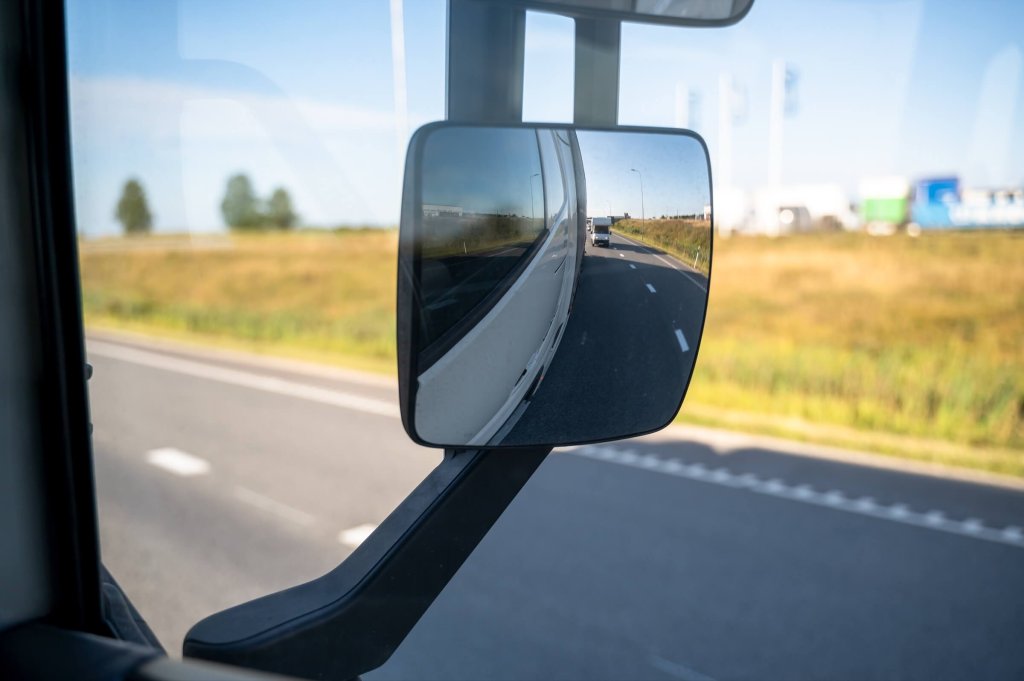
What HGV blind spots mean for everyone on the road
Lorries keep the country moving. Tens of thousands of them use our motorways and major A-roads every day, carrying the goods we all rely on.
But their size brings a challenge. HGV drivers have limited visibility around their vehicle, particularly when other drivers are overtaking, passing or changing lanes. Knowing where those blind spots are could prevent a serious accident.
The ‘know the zones’ campaign
In 2022, National Highways launched its ‘know the zones’ campaign to help drivers understand where HGVs have limited visibility. It followed a survey which found that while almost three-quarters of drivers said they took extra care when overtaking an HGV, 36% didn’t know how many blind spots an HGV has – and 36% found passing them on busy, fast roads nerve-wracking.
The campaign was backed by the Road Haulage Association, Logistics UK and HGV driver trainers, including Shannan Paterson, known from the BBC as the “Queen of Trucks”.
As she put it: “Driving a lorry is very different to driving a car. You can’t see anything behind you other than the trailer, and your only vision is in front of you and in the side mirrors.”
The four zones
HGVs have four main areas of limited visibility:
In front – directly below and ahead of the cab
Behind – right up close to the back of the trailer
On the left side – along the length of the vehicle
On the right side – especially near the cab
Extra mirrors and cameras help, but they don’t remove blind spots completely. If you’re in one, the driver may not know you’re there.
Three simple rules for drivers
National Highways’ advice is simple: don’t tailgate an HGV when you’re thinking about overtaking, and when you do overtake, do it quickly and safely so you don’t stay in an area of limited visibility.
In practice, that means:
Know the zones
Be aware of where an HGV driver can’t see you.
Only overtake when it’s safe
Make sure you have enough time and space.
Don’t linger
The less time you spend alongside a lorry, the better.
And a good rule of thumb: If you can’t see the driver’s mirrors, they can’t see you.
Why it matters
Pulling in too close in front of an HGV is especially risky. The driver may not see you in the blind spot below the cab, and can’t judge their stopping distance – and a fully loaded lorry needs a lot of room to stop.
And if the worst does happen
Motorways demand full attention, and even the most careful drivers can be caught out. When an HGV is involved in an incident, getting it recovered safely and quickly matters for everyone – the driver, other road users and the business waiting on that load.
That’s where we come in. HGV recovery is one of our specialisms. Our control room sends the right vehicle first time – from heavy underlifts to rotators that can bring an overturned lorry back onto its wheels – so the road is cleared and everyone can get moving again.
Need HGV recovery? Get in touch – we’ll be right there.